Sign up for Exclusive Purchase Tips

adhesive tape factory
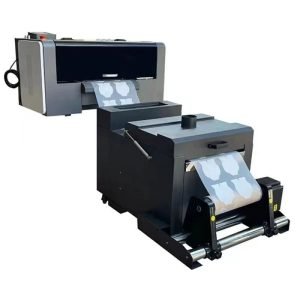
dtf printer 30cm

Demystifying DTF Suppliers: Your Gateway to Quality Printing

Table of Contents Introduction The Impact of DTF Printing The Significance of Choosing the Right DTF Supplier The Role of DTF Suppliers DTF Inks: The Essence of Vibrant Prints DTF Printers: Bridging Artwork to Fabric DTF Films: The Foundation of DTF Printing Technical Support: The Pillar of Reliable Printing Selecting the Right DTF Supplier Prioritizing Product Quality Embracing a Comprehensive Product Range Relying on Technical Support Balancing Pricing and Value Examining Reliability and Reputation Where to Find DTF Suppliers Online Marketplaces: Convenience and Caution Local Suppliers: The Benefit of Proximity Industry Events and Trade Shows: In-Person Connections Conclusion Unleash the Potential of DTF Technology Your DTF Supplier: A Partner in Success Introduction Direct-to-Film (DTF) printing has become a transformative force in textile decoration. This innovative technology offers a cost-effective and highly efficient method for creating stunning, long-lasting prints on various fabrics. However, your journey into successful DTF printing hinges on a crucial factor: choosing the right DTF supplier. In this comprehensive blog, we will delve deep into the realm of dtf transfer suppliers, exploring their pivotal role in the printing process, what they offer, and how to make an informed choice that aligns with your business objectives. The Role of DTF Suppliers 1. DTF Inks DTF inks are the very essence of your prints. These inks are specially formulated to adhere to fabrics and create vibrant, durable designs. DTF suppliers offer a diverse range of ink types, including standard, fluorescent, and neon inks, each catering to specific design requirements and desired
continue reading
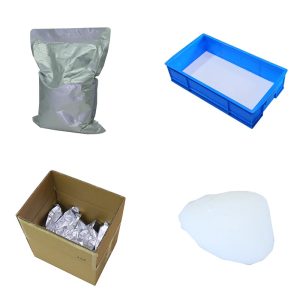
HOTMELT POWDER

Step Up Your Printing Game with DTF Powder: The Future of Textile Printing

What is DTF POWDER Direct-to-Film (DTF) adhesive powder is used in the process of direct-to-film printing, which is a method of transferring printed designs onto various fabrics and materials. Here’s a general guide on how to use DTF adhesive powder: Materials You’ll Need: DTF Adhesive Powder DTF  Film DTF PRINTER DTF INK T-shirt or Fabric Protective Paper or Teflon Sheet Squeegee or Applicator Tool How to use DTF Powder Steps: Print the Design: Start by printing your desired design onto a DTF film using a compatible DTF printer. The design should be mirrored if necessary, depending on your transfer method. Preheat the Heat Press: Preheat your heat press machine to the recommended temperature specified for DTF transfers. This temperature can vary depending on the specific DTF adhesive powder and film you are using. Prepare the Fabric: Place the T-shirt or fabric you want to transfer the design onto onto the heat press platen. Ensure it’s flat and free from wrinkles. Apply the Adhesive Powder: Sprinkle a layer of DTF adhesive powder evenly over the printed design on the DTF film. Make sure to cover the entire design. Shake Off Excess Powder: Gently shake off any excess adhesive powder from the DTF film. You can tap the film to help remove loose powder. Transfer the Design: Place the DTF film with the adhesive powder facing down onto the fabric in the desired position. The printed side of the film should be facing up. Cover with Protective Paper: Cover the DTF film

continue reading
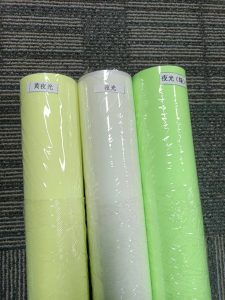
glow in the dark dtf film with different colors

Unleash Your Creativity with Glow in the Dark DTF Film!

Introduction What is Glow in the Dark DTF Film? https://www.verytack.com/wp-content/uploads/2023/10/yellow-glow-in-the-dark-dtf-film.mp4 In the world of garment decoration and custom apparel, innovation knows no bounds. One such innovation that has been making waves in recent years is Glow in the Dark DTF (Direct-to-Film) film. This mesmerizing material allows you to create eye-catching designs that come to life when the lights go out. In this blog, we will dive deep into the world of Glow in the Dark DTF film, exploring what it is, how it works, and some creative ways to make the most of it. Glow in the Dark DTF film is a special type of transfer material designed for use in the direct-to-film printing process. This unique film is infused with phosphorescent pigments that absorb and store light energy when exposed to a light source, whether it’s natural or artificial. When the lights are turned off, these stored photons are released in the form of a soft, eerie glow, creating a captivating and luminous effect. How Does It Work? The magic of Glow in the Dark DTF film lies in its phosphorescent properties. Here’s a simplified breakdown of how it works: Light Absorption: When the film is exposed to light, the phosphorescent pigments in the film absorb photons from the light source, storing this energy. Energy Release: As the surroundings become darker, the stored energy is gradually released in the form of visible light. This emission of light is what gives the material its signature glow. Creative Possibilities: 1. Spooky

continue reading
dtf fluorescent ink

Brighten Your World: DTF Fluorescent Inks for Stunning Designs!

How does fluorescent DTF printing work ? What is fluorescent DTF print? Let’s first understand fluorescent inks. Fluorescent inks are inks that glow under UV and black light. DTF fluorescent printing is the same as normal DTF. The only difference is that we do not use regular DTF inks. Design is the first step in printing. Patch colors are used in fluorescent prints. Cyan, Orange, Green, etc. Fluorescence should be considered when designing artwork. Images cannot be downloaded and printed. Vector design is required to change the colors or add patches. Fluorescent DTF (Direct-to-Film) printing is a specialized printing process that uses inks that fluoresce or glow under ultraviolet (UV) or black light. Here’s how the process generally works: Design Preparation: The process begins with the creation or selection of a design that incorporates fluorescent elements. These designs typically include specific patch colors, such as cyan, orange, green, or other fluorescent shades. It’s important to use vector design software for creating or editing the artwork so that colors can be easily adjusted and patch colors can be added or modified as needed. Selection of Fluorescent Inks: Instead of regular DTF inks, fluorescent DTF printing uses special fluorescent dtf ink. These inks contain pigments or dyes that have fluorescent properties, meaning they emit visible light when exposed to UV or black light. Printing: The selected design is then printed onto a transfer film or substrate using a DTF printer. The printer applies the fluorescent inks to the substrate, creating the desired design. The inks are applied in the same manner as regular DTF printing,

continue reading
Wide range of application for dtf film

Unveiling the Printing World: UV Printer, DTF Printer, and UV DTF Printer – Which is Right for You?

Development of UV/DTF/UV-DTF printers Traditional printers were no longer able to meet the needs of customers who had different printing requirements, such as rapid processing or printing on surfaces that were abrasive. In order to overcome the limitations of traditional printing, an innovative technique — UV printing — has been developed. UV Printer, developed to satisfy customers’ unsatisfied needs, still has some shortcomings. UV printers will have difficulty printing an object with a sloped surface, for example. DTF printers were developed to solve the problems caused by UV printers. DTF printers print first on DTF PET film instead of directly printing on an object’s surface, since UV printers can’t print on inclined planes. Your design will transfer to an object after the powdering and heating process is completed, even if the surface of the object is uneven or inclined. DTF printers have primarily been used for textile/leather prints. Due to differences in the inks and the lack of UV technology, color vibrancy is lower for patterns printed with DTF printers. DTF printers can print on textiles and leather, but the effect is not as good as that of UV printers. The DTF printers were created by those who wanted to achieve the ultimate in printing technology. This printer is able to print on surfaces that UV/DTF printers cannot print. It also prints high-quality patterns with accuracy. UV Printers and UV DTF Printers: Similarities and differences UV DTF PRINTERRevolutionize Your Printing Game with UV DTF Technology!Click HereDTF PRINTERDiscover the Secret Weapon Behind Stunning Fabric

continue reading
UV DTF PRINTER WITH 30CM WIDTH

The Future of Printing Has Arrived: UV DTF Adhesive Transfer Film Unveiled! 🌟

Introduction to UV DTF Technology Get quote for UV DTF Consumables https://www.verytack.com/wp-content/uploads/2023/09/uv-dtf-ab-film-application-2.mp4 UV DTF (Direct-to-Film) technology is an advanced digital printing process that is primarily used for creating high-quality graphics, signage, decals, and labels. Unlike traditional printing methods, UV DTF technology uses UV-curable inks, which are dried and hardened instantly using ultraviolet (UV) light during the printing process. This results in vivid and durable prints that adhere well to various substrates. Here’s how UV DTF Adhesive Transfer Film typically works: Design Preparation: The process begins with the creation or selection of a digital design or artwork that you want to print onto a fabric. This design is usually prepared using graphic design software. Printing on Transfer Film: Instead of directly printing the design onto the fabric, UV DTF technology prints the design onto a special adhesive transfer film using UV-curable inks,UV DTF PRINTER. These inks are cured (dried and hardened) instantly using ultraviolet (UV) light, which results in a sharp and vibrant image. Film Lamination: Once the design is printed on the transfer film, it is laminated onto a heat-resistant carrier sheet. This step is important for later transferring the design onto the fabric. Film Transfer: The printed design remains on the film or substrate. It is not transferred to fabric or textiles. Cutting and Application: The printed film or substrate can be cut into specific shapes or sizes and applied to various surfaces, such as signs, vehicles, or rigid materials. It is commonly used for creating adhesive-backed graphics. UV

continue reading
uv dtf consumables

Printing Revolution: Explore the Magic of UV DTF Printers for DIY Creations!

UV DTF printing uses UV-curable films to print UV-curable inks. The ink is transferred onto the substrate with a laminator that activates the adhesive on the backing. UV Direct To Film (DTF) vs UV Printing UV DTF involves the transference of UV-curable pigments from a substrate to a film. UV printing is the opposite, as it applies UV-curable dye directly to the substrate. It then cures instantly using UV lamps. UV DTF offers a variety of shapes and materials. UV printing is more commonly used on flat surfaces or to print directly onto the substrate. Which Printer to Use for UV DTF UV DTF requires a specialist printerthat is capable of handling the UV film-transfer process. These printers have been designed to print with UV-curable pigments. They also provide the precision and controls needed for a high-quality print. UV DTF Durability UV DTF prints’ durability depends on a number of factors including the quality of materials, environmental conditions and handling. UV-curable pigments, on the other hand, are well-known for their resistance to fading, scratches, and other types of damage. This results in prints that last a long time. DTF (UV DTF) and DTF Inks used in UV DTF transfers are different from traditional DTF (Direct-to-Film) inks used in fabric transfers. Traditional DTF transfer inks are solvent-based, whereas UV DTF inks use -UV-curable inks. UV DTF Transfers offer: enhanced durability The faster the curing time, the better. Comparing traditional DTF transfers with the newer DTFs, there are environmental benefits. Disadvantages Of UV

continue reading
DTF POWDER APPLICATION

Unlock the Magic of DTF Powder: Your Ultimate Guide to Stunning Fabric Transformations!

How to use DTF POWDER DTF (Direct-to-Film) powder is typically used in the DTF printing process to create adhesive layers for transferring designs onto garments or textiles. Here’s a step-by-step guide on how to use DTF powder: Materials Needed: DTF printer with compatible inks DTF film DTF adhesive powder Heat press machine Garment or textile to be printed Steps to Use DTF Powder: Design Preparation: Start by preparing the design you want to transfer onto the garment using the appropriate design software. Ensure that the design is in a format compatible with your DTF printer. Printing on DTF Film: Load the DTF film into your DTF printer. Ensure that you have the correct settings for DTF printing, including color profiles and resolution. Print your design onto the DTF film using the DTF printer and compatible inks. The design should be in reverse (mirror image) to ensure it appears correctly when transferred onto the garment. Application of Adhesive Powder: Lay the printed DTF film face-up on a clean, flat surface. Evenly and thinly sprinkle the DTF adhesive powder over the entire printed area of the film. Be sure not to overapply the powder, as excess powder can affect the quality of the transfer. Shake off any excess powder, and make sure the entire design is covered with a thin layer of adhesive. Adhesive Curing: Place the powdered DTF film with the design facing up on a heat press machine with a silicone pad or Teflon sheet to protect the film. Apply heat and pressure according

continue reading
glow in the dark dtf film

DTF Transfers Unveiled: The Secret to Stunning, Custom-Designed Garments!

Table of Contents: Introduction to DTF Transfers Revolutionary Approach to Garment Decoration Versatility on Dark and Light-Colored Fabrics Simplicity with No Weeding or Masking Compatibility with Various Fabric Types Using DTF Transfers Turnaround Time Application Instructions Prepare the Garment Position the Transfer Heat Press Cool Down Parchment Paper Final Touch Care Instructions Turning Garments Inside Out Machine Washing in Cold Water Avoiding Bleach and Softeners Steering Clear of Dry Cleaning and Ironing Tumble Drying on a Low Setting Advantages of DTF Transfers Full-Color Versatility Elimination of Weeding and Masking Wide Fabric Compatibility Exceptional Durability Applications of DTF Transfers Custom Apparel Branding and Merchandising Sports and Team Uniforms Event and Celebration Apparel Fashion and Streetwear Innovations in DTF Technology Continuous Technological Advancements Improved Print Quality and Durability Enhanced Environmental Friendliness Design Considerations Factors for Design Success Importance of High-Resolution Images Vector Artwork for Scalability Environmental Impact Considerations for Eco-Friendly Practices Sustainable Ink Choices Responsible Waste Disposal Introduction of DTF Transfers Direct-to-Film (DTF) transfers represent a revolutionary approach to decorating garments with full-color designs. These transfers are designed to be heat-applied and are suitable for use on both dark and light-colored fabrics. The beauty of DTF transfers lies in their simplicity – there’s no need for the labor-intensive processes of weeding or masking. Whether your fabric is made of 100% cotton, a cotton/polyester blend, or even 100% polyester, DTF transfers can work their magic. All it takes to bring your creative visions to life is a reliable heat press machine. Let’s delve into

continue reading
Nessary items for dtf printing

Unlocking the Secrets: DTF vs. Screen Print Transfers Revealed!

Brief Overview of DTF Printing and Screen Print Transfers DTF Printing (Direct to Film Printing): DTF Printing is a modern and innovative technique used in the custom apparel industry. It involves printing a design directly onto a specialized film. This film acts as a transfer medium between the printer and the fabric. DTF Printing starts with creating a digital design, which is then printed onto the DTF film using DTF printers. These specialized printers are equipped with precise printheads that can accurately deposit DTF ink in small droplets, allowing for intricate details and vibrant colors. DTF Printing offers several advantages, including superior color detail and vibrancy, durability, a soft feel on fabrics, versatility across various fabric types, and quick turnaround times. It is particularly favored for custom apparel, promotional products, and personalized merchandise, and is accessible to small businesses and startups due to its efficiency and flexibility. Screen Print Transfers: Screen Print Transfers, on the other hand, represent a traditional printing method. In this process, a design is separated into individual color layers, and each layer is used to create a separate screen. These screens are then placed over the fabric, and ink is pushed through them onto the fabric’s surface. The layers of ink combine to create the final design. Screen Print Transfers have certain limitations, including complexity for multi-color designs, a limited color range that may require custom mixing, time-consuming setup, and being most cost-effective for large print runs. 1. DTF Printing Understanding the DTF Printing Process: DTF (direct-to-film) Printing is an innovative

continue reading